How to Use a Lemon Vibrator When Hormones Shift Throughout Your Cycle
Here's the thing nobody tells you: your clitoris is not the same on day 5 of your cycle as it is on day 20. The sensitivity changes. The kind of stimulation that feels incredible during your follicular phase can feel harsh or numb during your luteal phase. And if you're using a lemon vibrator or any clitoral suction toy, you need to know how to adjust.
I'm going to walk you through exactly what happens hormonally, when your sensitivity peaks and dips, and how to dial your lemon vibrator settings up or down to stay in pleasure all month long.
What estrogen and progesterone actually do to your clitoris
Your menstrual cycle isn't just about fertility. It's a monthly shift in the neurochemistry of pleasure itself. Two hormones orchestrate this: estrogen and progesterone. And they don't work the same way.
Estrogen rises during your follicular phase, roughly days 1 to 14. As it climbs, your clitoral tissue swells slightly. Blood flow increases. Nerve endings become more sensitive to touch. Your body also produces more natural lubrication, which means friction-based stimulation feels smoother and gentler. This is why many people describe the first half of their cycle as the "on" phase. Everything feels easier to access.
Progesterone takes over after ovulation, during your luteal phase. Days 15 to 28. Progesterone is heavier, slower, more grounding. It makes your nervous system slightly more alert to threat (which is why anxiety often peaks during the luteal phase). Clitoral swelling goes down. Natural lubrication decreases. Blood flow to the genitals reduces. And here's the kicker: your pain threshold actually lowers, which means stimulation that felt perfect two weeks ago can feel too intense now.
That's not dysfunction. That's biology. And it's the reason why your lemon vibrator settings need to change throughout your month.
The follicular phase: when intensity and variety work best
Days 1 to 14 (roughly). Estrogen is climbing. Your clitoris is swollen and highly responsive.
This is when you can experiment. This is when higher intensity settings on your lemon vibrator actually feel good. The suction stimulation is more forgiving because your tissue is thicker and better lubricated. You can use faster patterns. You can play with longer sessions without the clitoris becoming overstimulated or sore.
If you've been curious about a higher pattern number on your lemon vibrator, this is the phase to try it. Days 8 to 13 are often the sweet spot: your estrogen is peaking just before ovulation, and your clitoris is at peak sensitivity and volume.
Water-based lubricant is optional during this phase, but it never hurts. Some people find that the natural lubrication is genuinely sufficient. Others like the glide of added lube anyway. Trust what feels right to your body.
One note: if you're in your period itself (days 1 to 5 or so), spotting is normal. Some people want to use the lemon vibrator on their period, some don't. There's no right answer. Just know that your clitoris might feel slightly less responsive than it will be by day 8 or 10.
The ovulation window: peak sensitivity and shorter sessions
Days 12 to 16. Estrogen surges, then drops. Progesterone begins to rise.
This is the most sensitive window of your entire cycle. Your clitoral nerve endings are at their most responsive, but the tissue is already starting to deswell as estrogen drops and progesterone climbs. This creates a paradox: everything feels more intense, but it can also feel overwhelming faster.
This is when you want to use your lemon vibrator at a lower to mid-range intensity. Patterns 1 to 3 instead of 4 to 6. Keep sessions shorter, maybe 10 to 15 minutes instead of 20 to 30. Pay attention to your body's feedback. Ovulation is a window of extreme pleasure, but it's also a window where you can tip quickly into overstimulation or soreness.
Many people report that orgasms during ovulation are the most intense of their cycle. Use that. But respect the sensitivity. Your clitoris will thank you.
The early luteal phase: rebuilding sensation
Days 17 to 21. Progesterone is rising. Estrogen is dropping. Clitoral swelling is decreasing significantly.
This is the phase where sensation starts to feel muted. Not broken. Not numb. Just a shift in baseline. You might notice that patterns that felt incredible last week don't quite hit the same. This is normal. It's also the moment where most people make a mistake: they push the intensity higher to compensate.
Don't. Pushing harder often backfires. Instead, go longer. Use a lower pattern on your lemon vibrator, but extend your session. You're rewiring your nervous system to find pleasure at a gentler frequency. It's not less pleasurable. It's differently pleasurable.
Lubricant becomes much more important here. Your natural lubrication is dropping, and your tissue is thinner and more sensitive to friction. Water-based lube isn't optional anymore. It's essential. It protects tissue and also helps sensation flow differently when you're using reduced intensity.
This is also a good phase to explore non-genital pleasure. Breast stimulation. Deeper touches. Partnered play. Your clitoris doesn't need to do all the work.
The late luteal phase: patience and gentleness
Days 22 to 28. Progesterone is at its peak. Estrogen is at its lowest. Clitoral tissue is minimal. Natural lubrication is minimal. Pain threshold is lowest.
This is the phase where many people feel like pleasure is out of reach. It's not. It's just asking for a different approach. Think of your lemon vibrator as a tool that now requires more finesse, not force.
Stick to patterns 1 to 2. Use generous amounts of water-based lubricant. Warm up longer before touching your clitoris directly. Some people find that indirect stimulation works better in this phase, stimulating the area around the clitoris rather than directly on it. This is when external vibration on your lower abdomen or pelvic mound can be more pleasurable than direct clitoral suction.
If you're experiencing PMS mood shifts, brain fog, or anxiety during this phase, your nervous system is heightened to threat. That means your clitoris is slightly more defended. Don't interpret that as broken. Interpret it as a signal to slow down and approach with more patience.
Many people report that pleasure feels distant or impossible in their luteal phase. But the research shows that orgasms are actually easier to achieve in the luteal phase if you adjust the approach. You're not chasing the same flavor of pleasure as the follicular phase. You're discovering a different flavor.
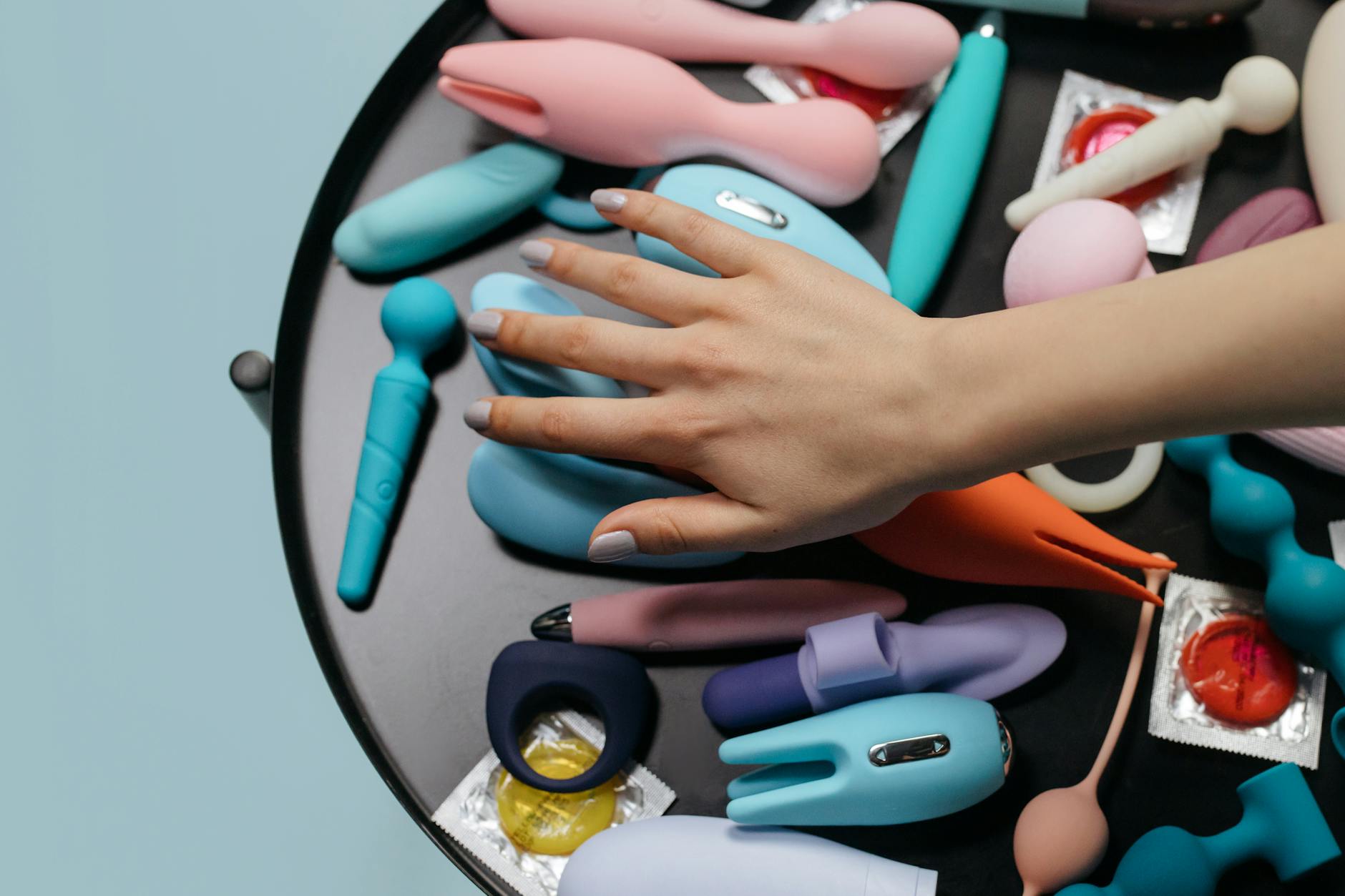
Photo by cottonbro studio on Pexels
Why lemon vibrators are especially cycle-friendly
Suction-based stimulation like the lemon clitoral vibrator works differently than traditional vibration. Instead of rapid friction, you're creating a pressure wave. This means you have more control over intensity without necessarily increasing speed. You can adjust how much suction you're creating by changing the seal, the pattern, or both.
This matters for cycle syncing because it gives you granular control. Unlike a vibrator where intensity is locked to speed, a lemon vibrator lets you dial sensation up or down in ways that feel safer and more nuanced throughout your hormonal shifts.
Also, suction works beautifully with the reduced lubrication you experience in your luteal phase. Because you're not relying on friction, your tissue doesn't need as much natural glide. This is one reason why people often report that lemon vibrators feel more comfortable during the second half of their cycle compared to other toys.
Tracking your pattern
Here's my practical advice: download a period tracking app, or just make a simple note in your phone. Mark which pattern settings felt best on which days. After two or three cycles, a rhythm will emerge. You'll know that days 8 to 12 are your "go hard" days, and days 22 to 26 are your "gentle and long" days.
You don't need to follow your cycle perfectly. But knowing your own rhythm means you stop blaming yourself when pleasure feels different. You're not broken. Your body is just different every week.
Common rhythm hiccups and how to fix them
Sometimes cycle syncing with your lemon vibrator doesn't feel obvious. Stress can delay or flatten your cycle entirely. Birth control suppresses hormonal fluctuation. PCOS, endometriosis, and other conditions change the typical pattern. If your cycle is irregular or you're on hormonal birth control, you're not out of luck. You're just working with a different map.
If you're on hormonal birth control, your hormone levels stay relatively flat all month. This means your clitoral sensitivity might not shift as dramatically. You can likely use consistent settings throughout the month, or you might notice a subtle shift around placebo week if you're using a traditional pill.
If you have an irregular cycle or a condition like PCOS, your cycle might be longer or you might skip ovulation entirely some months. In this case, track sensation instead of dates. Notice when your clitoris feels more responsive and when it feels more guarded. That internal feedback is more useful than a calendar.
Syncing with a partner
If you're partnered, your cycle rhythm becomes a communication tool. Let your partner know which weeks you're feeling high sensitivity and which weeks you want longer, gentler play. This turns potential friction into intimacy. Your partner learns your body's rhythm. You feel understood. The lemon vibrator becomes a shared language instead of a solo tool.
For more on navigating pleasure conversations with a partner, read about how to talk about lemon vibrators with your partner without it getting awkward.
FAQ: Hormones and lemon vibrator use
Can I use my lemon vibrator during my period?
Yes. Some people find it soothing and pleasurable. Some prefer to skip it. Neither is wrong. If you do use it, your clitoris might feel slightly less responsive on days 1 to 3, and sensation typically improves by day 4 or 5. Spotting is normal. If you're using a lemon vibrator during your period, make sure you're using water-based lubricant and keeping the device clean.
Why does my lemon vibrator feel too intense during the second half of my cycle?
Progesterone lowers your pain threshold and causes clitoral tissue to deswell. Stimulation that felt perfect in week one can feel sharp or overwhelming in week three. Solution: lower the pattern number, use more lubricant, and lengthen your session instead of intensifying it. You're not broken. Your nervous system is just more alert.
Does cycle syncing work if I'm on hormonal birth control?
Hormonal birth control flattens your natural hormone fluctuations, so dramatic monthly shifts are unlikely. You might notice subtle differences around placebo week, or you might have consistent sensitivity all month. Neither is abnormal. Track what you actually feel rather than what the calendar suggests.
What if my cycle is irregular?
Track sensation instead of dates. Notice patterns in how your clitoris responds across different weeks. Some people with irregular cycles find that stress, sleep, and nutrition affect sensitivity more than hormones do. Experiment and listen to your body's actual feedback rather than forcing a cycle-based pattern.
Can I get a lemon vibrator recommendation for my specific cycle phase?
Most clitoral vibrators, including lemon-shaped suction toys, have variable intensity settings that let you dial sensitivity up or down. This is exactly what you need for cycle syncing. The adjustability matters more than the brand. Explore different intensity options and find what works for your baseline sensitivity.
Why do orgasms feel different during my luteal phase?
Orgasms don't feel "less than" in the luteal phase. They feel different. Hormone shifts change clitoral responsiveness and also affect how your brain processes pleasure. Luteal phase orgasms are often described as deeper or more full-body, while follicular phase orgasms tend to be sharper and more localized. Different doesn't mean worse.
The bottom line
Your lemon vibrator isn't one-size-fits-all because your body isn't one-size-fits-all. Your clitoris changes every week. Your sensitivity rhythm is real, measurable, and worth honoring. The first step is paying attention. Notice when your lemon vibrator feels perfect and when it feels off. That feedback is your body teaching you its own language.
Once you sync your settings to your cycle, pleasure stops feeling like a mystery and starts feeling like a skill you're mastering. And that's when everything shifts.